

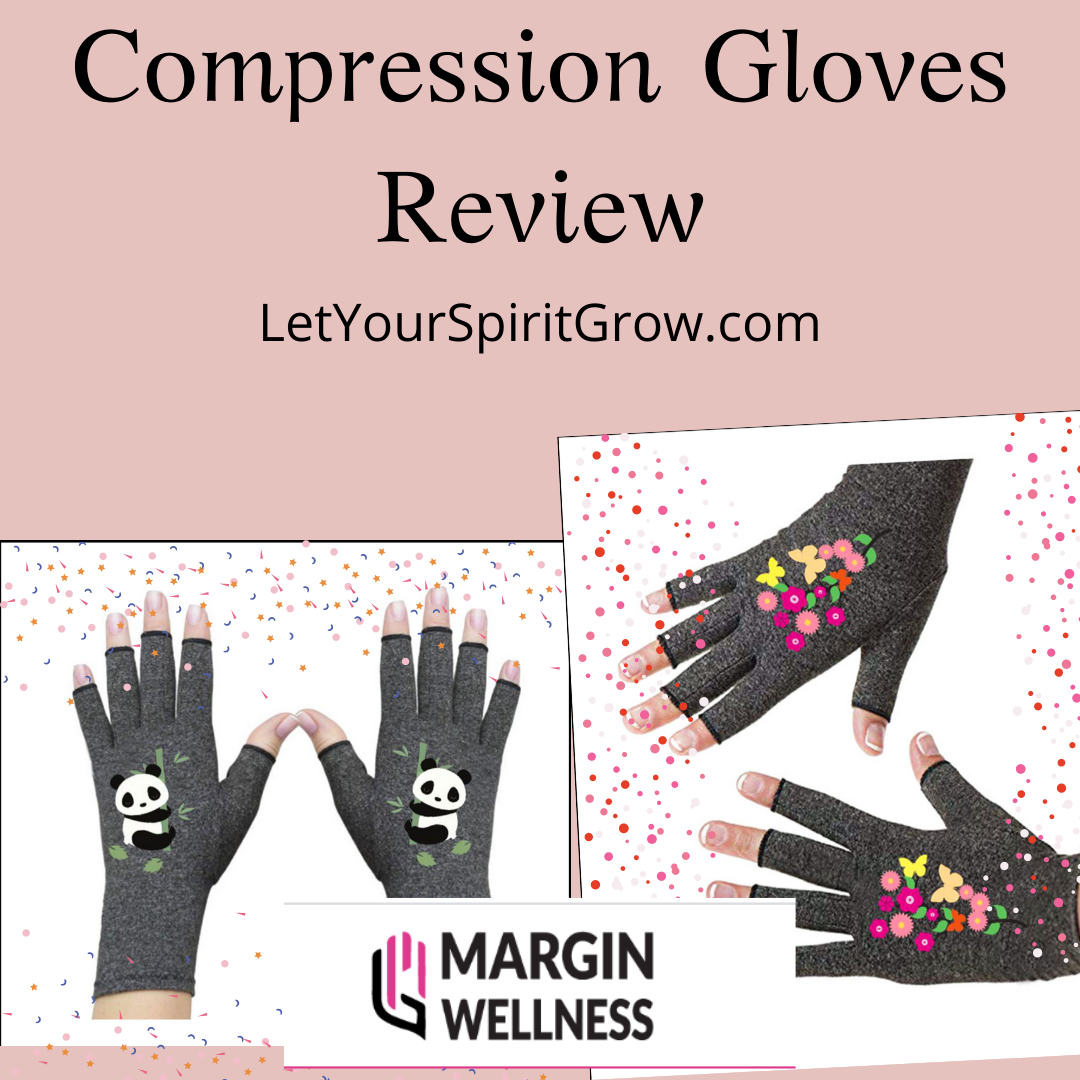
 Compression garments have been around for a long time, as far back as Ancient Egypt and Rome, there is proof that bandages were used to bind patients legs to treat injuries. In the 1950s they became more well know, thanks to the modern day compression garment inventor Conrad Jobst. Today there are varying degrees of compression strength garments available. Medically they are often used by people who have to stand for long periods of time, or have poor circulation. They are also beneficial to persons who do repetitive tasks, like sewing, factory work, or anyone who types on a computer all day. Arthritis and carpal tunnel syndrome sufferers know how beneficial compression garments can be, as wrist or hand pain can cause daily activities to become difficult at best, and almost impossible at worst. Edema or swelling in the tissues of joints is also very common in persons suffering with arthritis. Even someone who normally has no issues with their joints, can be sidelined by an injury or sudden illness which affects their hands and wrists. Many companies offer compression garments which are effective but only come in standard colours of black or beige, and lack decorative elements. While compression socks are available in fun patterns, wrist and hand compression garments remain for the most part, only available in standard colours of black and beige. Enter Margin Wellness. This woman owned company is the brainchild of Gina. A sufferer of carpal tunnel syndrome, she knew the pain of the condition, and how bland and boring her choices were in finding relief. Thus, Margin Wellness was born. Gina combined her love of childhood storybook illustrations with the need for quality, but affordable compression gloves and wrist splints. There are many floral and animal designs to choose from, including a custom option. Compression gloves and wrist splints are available online at the Margin Wellness website and on Etsy, an online marketplace dedicated to promoting handmade goods and vintage items. Compression Gloves Product Review Gina was kind enough to send me a set of compression gloves to try for myself. Measuring for the correct size was easy thanks to an easy to read size guide. Sizing is available in Small to X-Large. I chose Medium and it was a perfect fit for my hands (ring size 6). The gloves were a bit long on my pinkie due to my short fingers. 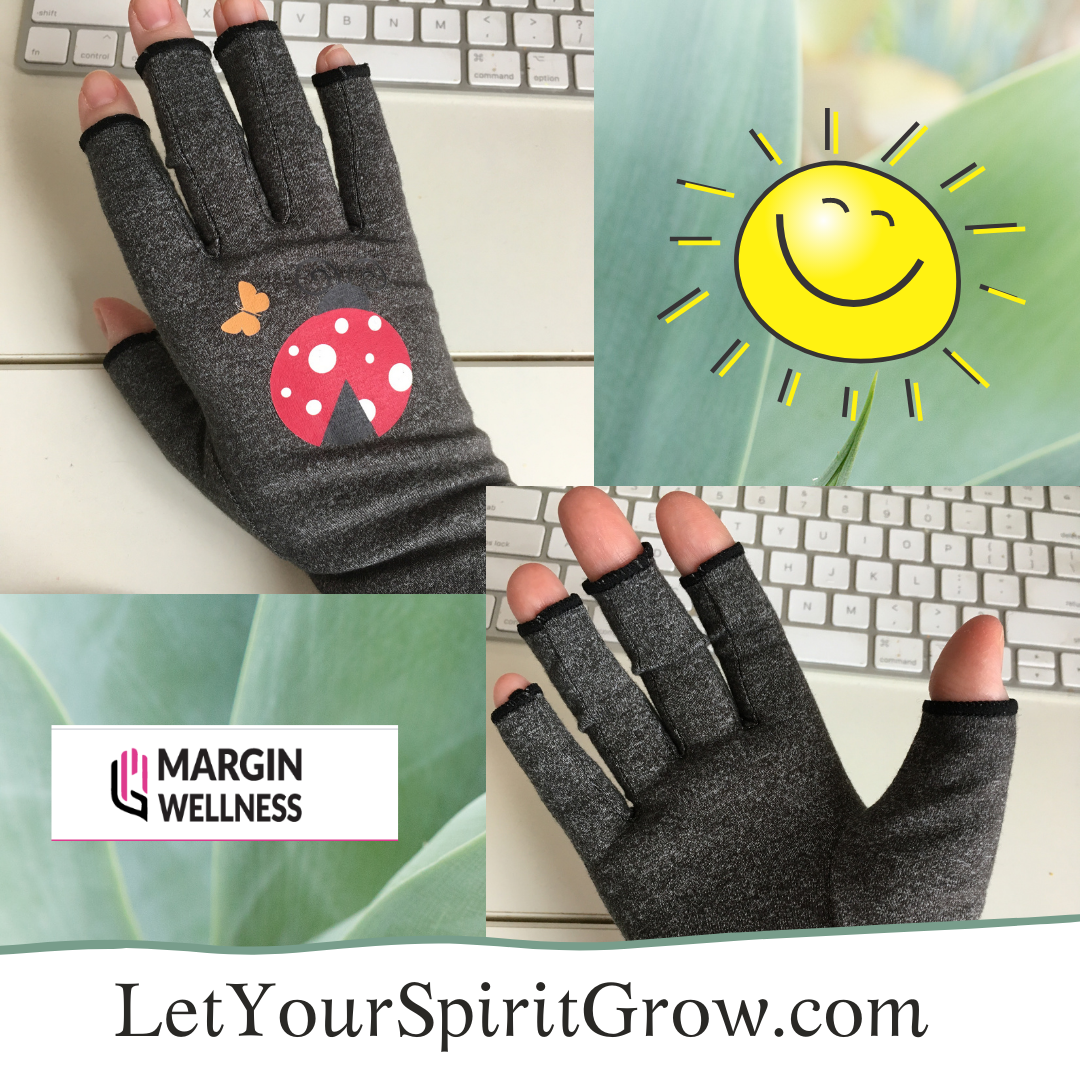 I picked a ladybug design in the shade “Grey”. As I have arthritis, I found the Margin Wellness compression gloves to be very soft and easy to put on. The support is light/medium and comfortable. Typing was a little bit challenging wearing them but I would say that was more due to my abilities, than any issues with the compression gloves. The design is cute and colourful, some elements of the design, mainly the thin black antenna, were not as clear on the dark gloves, so keep that in mind when choosing a design.
How To Care For Your Compression Gloves Care instructions are included with the compression gloves. Hand washing and air drying is recommended to keep them in the best shape possible, and to ensure the design lasts. Gina also suggests removing them by pulling off from the wrist. To summarize, I am very happy with my Margin Wellness compression gloves. The design is fun, and the gloves fit well, and they are soft, supportive and durable.
0 Comments
The pandemic has been hard on everyone. Change is uncomfortable to many people. Continue reading to learn 4 shifts in perspective that can help you cope with the adjustments we are all facing.  Shift Your Perspective Shift Your Perspective The COVID-19 pandemic has changed life for nearly everyone in one way or another, whether it’s through the loss of income, adjusting to working from home, or learning to cut your own hair without causing a disaster in the process. While some changes may bring about positive effects, it can be challenging to adapt to a very changed world. Major transitions — such as selling your home — can be difficult right now, but with some careful planning and strategic action, you can set yourself up for a sale. Consider the featured suggestions from Let Your Spirit Grow. The following article is only one of hundreds of great pieces showcased in Let Your Spirit Grow that will inspire you to live your best life. For more inspiration on topics including alternative health, spirituality, personal growth, and more, stay up to date with their blog. Shift Your Perspective For many, adjusting to life in the age of COVID-19 has come with many challenges. Living during a pandemic is anything but normal, and on top of that, the health crisis has upended future plans for virtually everyone. Some changes may be by choice, but the hard ones are those you can’t choose — losing a job, for example. All changes come with some adjustment time, but there are often silver linings, whether it’s finding time to embark on a new career or finally planting that veggie garden in your backyard. Opportunity for Change For those who have lost a job because of COVID-19, maybe it’s time to reconsider your career. Is it as rewarding as it once was? If you find that you’re ready for a change, this could be a great opportunity to look into a new career. For expert guidance, you may want to work with a career counselor. If what you’re really craving is new inspiration, take a break from job searching and use the downtime to read books, get outside, and spend time with family. Inspiration usually strikes when we give our minds time to relax and gain new perspectives. Consider Your Timeline For homeowners who had planned to sell their homes this year, the pandemic has likely caused some unexpected delays and difficulties in the process. Don’t lose hope; you can still get the ball rolling. While your plans may feel like they’ve been hijacked due to COVID-19, it may be in your best interest to be flexible in your timeline. House prices are dropping in some areas as a result of the pandemic, and you might have to compromise more than you’d like on price if you choose to sell while the economy is taking a hit. If you do choose to wait it out, there are steps you can take now to set yourself up for a sale later. One thing you may want to consider is investing in one or a few home improvements that most appeal to buyers. For example, features like an updated kitchen, recessed lighting, and hardwood floors can boost your home’s sale price and attract more views to online listings, and there are many ways to pay for these fixes. Even if you don’t plan to list your home yet, it will be helpful to talk to a real estate agent about projects that can improve your odds of selling quickly once you’re ready to bring it to market. Another big step for any homeowner prior to selling is decluttering. Not only does it help you with your impending move, but it also helps create a blank slate for staging. If you’ve found that your selling timeline has changed considerably, take the extra time to pare down what you own and make your move to the new house less stressful. Using Technology to Show Your Home If your timeline is firm, there are still ways to sell now. With the pandemic eliminating many in-person home showings, estate agents are turning to technology to help sell homes. There are virtual options for nearly every step of the process, from staging to video tours. Virtual staging is an affordable alternative to hiring a staging company, and also allows you to make your home look great while maintaining physical distancing. And finally, before having someone visit, you and your estate agent can offer video tours for buyers. Major life changes can feel daunting, but it’s important to take a step back and see what positives you can find during this pandemic. Whether it’s spending more quality time with family or adopting a new pet, there are ways to cope and adjust. And if your home-selling plans feel uncertain, consider adjusting your timeline and take small steps to work towards your goal. The pandemic won’t last forever, and when it’s over, you’ll be ready for what comes next.
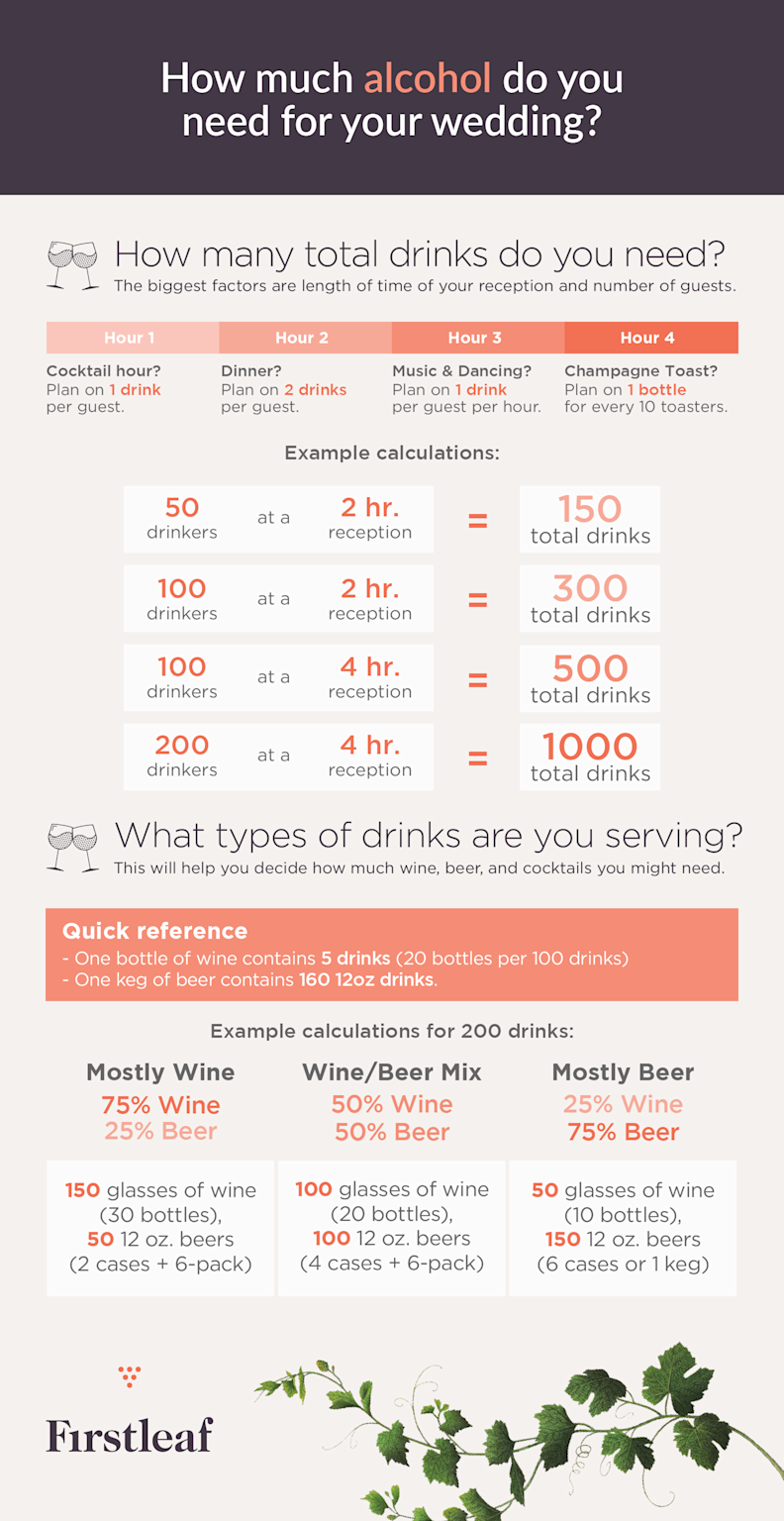
Expert tips how to pair wine with chicken, beef, pork, fish, or vegetarian entrees at your wedding. Plus formulas to help you decide how much wine to buy.
There are plenty of things to stress over while wedding planning, but picking the right wine - and how much to buy - shouldn’t be one of them. Firstleaf has put together a guide that covers everything you need to know.
Ultimately, you want to pick something that wine novices and enthusiasts can both enjoy and that compliments your meal. The trickier part is determining how much wine to order, as this depends on the number of guests, the length of the event, and what else you’re serving. Firstleaf has a breakdown of a formula that will make sure everyone gets to drink their fill. 
Read 6 tips to help you combat anxiety without leaving your home  The world is such an uncertain place at the moment and we're facing some unpredictable and completely unprecedented times. We're worried about getting sick, our families getting ill, losing friends and loved ones, not earning any money, potentially losing our jobs or businesses folding under the economic pressure. All this coupled with the stress and strain of keeping away from others and anything else life can throw at you on an average day, it's no wonder many of us are finding each day more difficult than the last. Anxiety is crippling at the best of times, but these days it seems to be all-consuming. So, what's the solution? Now it's never been more important to take your mental health seriously and practice self-care wherever and whenever you can. Want to know more? Discover some simple ways you can combat and calm your anxiety without leaving home. Reach out to a psychic Did you know that people have sought the advice and comfort of psychics for centuries, and while many people reach out in the hope of connecting with lost loved ones, you can reach out to psychics and mediums for other reasons too? Speaking to someone who can connect with the unknown and perhaps give you confidence and reassurance about your current situation is going to do wonders for your anxiety. You don't even have to leave the house, check out mediumchat.co.uk for an online reading. Practice deep breathing Breathing techniques aren’t just for women who are going through labour! They’re actually a simple, yet effective way to remain calm and keep your emotions and anxious thoughts in check. Practice breathing in for four seconds and then exhaling for another 4 seconds. Do this for around 5 minutes and you’ll find that controlling your breathing helps relax your body and settle your heart rate. Go for a walk Getting plenty of fresh air and moving your body is great for managing anxiety. A change of scenery, fresh air and getting your blood pumping is good for your mental health.  A change of scene is good for your mental health Write down your troubles Writing down your concerns and worries is another simple way to combat and manage your anxiety levels. When you write down what’s troubling you, it gets those worrying thoughts out of your mind and onto a slip of paper instead. You may see how small your concerns really are and realise how manageable they can be. Remove triggers Does watching the news and checking your social feeds trigger those feelings of anxiety? The best option is to recognise what triggers these concerns and remove them. Avoid following the news as closely as you may have been if someone on your social media is being particularly worrisome then unfollow them for a while, make an active choice to only follow sites that are reliable sources and focus on the things that make you happy and relaxed instead. Reach out to friends and family Whether it's coronavirus that's giving you anxiety or you're worried about money, family, home-schooling your children, then don't be afraid to reach out to your friends and family for reassurance. Do you have trouble falling asleep and staying asleep? Read this curated guest post to learn some great tips on how you can get a good nights rest.  Getting Enough Sleep Is Vital To Your Health Sleeping is one of the easiest things to do, so why can it be so difficult to fall asleep and then stay asleep? Personally, I have fought with insomnia in different periods of my life. The problem was always clearly related to stress and having too many worries, but the underlying reasons and possible solutions differ from person to person. Here’s what some of the experts say:  Alessa Caridi ALESSA CARIDI – JOBUFIT Walk it out We spend SO much of our work days sitting only to come home, cook dinner, eat dinner sitting down, and then catch up on our favorite TV series sitting down. Get where I am going with this? This seated statue feeling doesn’t help me go to sleep. In fact, it does the opposite, I’m not tired at all when it comes to my bedtime. So, I plan some light movement before I head to bed. Not a traditional workout, but some light housekeeping. I tidy of the living room, maybe fold a basket of laundry (standing up), and I clean the kitchen / load the dishwasher. This movement, combined with the time of the evening, allow my body to feel tired and really look forward to climbing into bed.  Cindy Perlin CINDY PERLIN – ALTERNATIVE PAIN TREATMENT DIRECTORY Do some gentle range of movement exercises and stretches before you get into bed. One of the contributors to difficulty falling asleep and waking in the middle of the night is trigger point pain. A trigger point is a hyper irritable spot, a nodule in a taut band of skeletal muscle, that causes pain, often in an area distant from the spot. Emotional stress, overexertion and inactivity all activate trigger points and the pain can be severe. If you’ve been immobile for too long, either before you go to bed, or during sleep, the inactivity can cause trigger point activation and pain. Move your head and neck through a full range of slow motions, rotate your arms backwards and forwards, make bicycling movements with your legs while lying down, rotate your feet and ankles and move them back and forth, twist your upper body from one side to the other and so forth, making sure to do the movements slowly and gently. These and similar movements will reduce the chance that trigger point pain will keep you from falling asleep or staying asleep.  Elise Marie Collins ELISE MARIE COLLINS Good sleep starts at sunrise Get out early to get light on your eyes. The sun resets your biological clock so that you feel sleepy at night and alert in the morning. Daylight wakes you up your physiology by halting melatonin production.  Loren Fishman LOREN FISHMAN – SCIATICA.ORG Get the clock out of sight The commonest form of insomnia is the worry: “It’s so late. If I don’t get to sleep right now I’ll be a wreck tomorrow,” which makes the worrier so anxious that she/he looks at the clock, worries even more, is less able to relax, and lo, it’s even later than it was before. This, naturally, brings about another time check. Intervene on this vicious cycle by taking the clock out of the recurrent equation.  Robert Herbst ROBERT HERBST – W8LIFTERUSA.COM The inability to fall asleep is often in one’s head and becomes a self-fulfilling prophecy. People tell themselves they have trouble falling asleep and then they start dreading going to bed and when they get there, expect not to fall asleep. It’s like when say they can’t sleep on airplanes and then immediately turn on a movie when they get to their seat. Through years of necessity, I have told myself that I can sleep anywhere-planes, trains, and automobiles-and I take advantage of the quiet time. I have gotten off a long flight from New York to Australia fresh and ready to go. So when one gets into bed, they should just know that they are going to fall asleep and relax.  Rhoda Climenhaga RHODA CLIMENHAGA – YO1 Work at Sunrise, Rest at Sunset As the sun rises, the Qi and blood in our bodies move from the inner organs to the exterior channels to facilitate activity. As the sun goes down, specifically between 11 p.m. – 3 a.m., the Qi and blood return to the organs. If you are not resting during this time, these organs will not be able to do their job and you will, at the very least, feel sluggish the next day.  Dominique Hodgin DOMINIQUE HODGIN – DR. SEARS WELLNESS INSTITUTE Read for at least 5-10 minutes before bed Reading has been proven to lower cortisol levels. It helps to calm your mind and body at bedtime. There is something about relaxing and enjoying written words, especially ones of encouragement or humor, which sets the stage for sleep. Just make sure what you are reading is lulling and not over-stimulating, like a murder mystery or work emails. It is also preferable to keep your reading off a back-lit screen — or at least use a blue light blocking app or glasses.  Martin Reed MARTIN REED – INSOMNIA COACH Always get out of bed at the same time every day Getting out of bed by the same time every day strengthens the sleep/wake cycle and ensures that adequate sleep pressure builds during the day. Over time, this will make it easier to fall asleep at night and improve sleep quality.
|

 RSS Feed
